Air Source Heat Pumps
An Air Source Heat Pump (ASHP) system is made up of an external unit, which captures free, ambient heat energy from the outside air and transfers it into usable heat for your home’s central heating system and domestic hot water.
By efficiently generating clean heat on your property, you drastically reduce your reliance on conventional fossil fuel boilers and the amount of gas or electricity you need to buy for heating, which provides a long-term hedge against rising energy prices and allows you to significantly cut your household bills and carbon emissions.



Why Air Source Heat Pumps?
The foremost benefit for a UK homeowner is the significant and immediate financial gain, leading to greater energy independence. By installing an Air Source Heat Pump (ASHP) system, households capture free, ambient heat from the outside air, drastically reducing their reliance on costly fossil fuels drawn from the gas network and subsequently lowering monthly utility bills. Crucially, the transition to this low-carbon technology is supported by the government-backed Boiler Upgrade Scheme (BUS). This creates a valuable financial incentive, with substantial grants available to offset the upfront installation cost, contributing further to the return on investment. Given the historically volatile and upward trend of UK energy prices, investing in an ASHP provides a robust defence against future price rises, securing predictable heating costs for the long term and turning the home into an energy-efficient sanctuary.
Beyond the direct financial advantages, an ASHP installation offers compelling environmental and property value benefits. Ambient air energy is a renewable, clean resource, allowing homeowners to significantly cut their carbon footprint and actively contribute to the UK’s net-zero targets by reducing demand on fossil-fuel-based heating. Furthermore, installing renewable energy technology enhances the overall energy performance of the property. This often results in a higher Energy Performance Certificate (EPC) rating, which is increasingly appealing to prospective buyers and can demonstrably increase the resale value of the home. These systems are renowned for their low maintenance requirements and long operating lifespans, typically around 20 years, making them a durable and sustainable investment for any environmentally conscious homeowner.
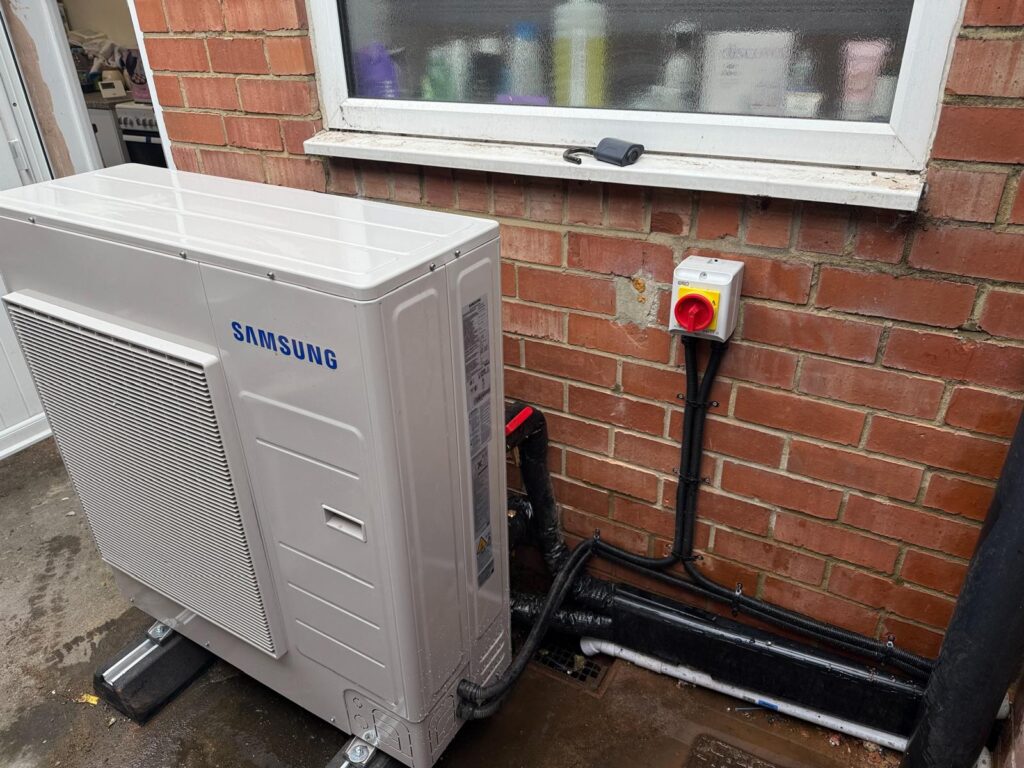
Air Source Heat Pump Key Benefits
Significantly Lower Heating Bills: Air Source Heat Pumps let you generate your own heat from the outside air. This means you buy much less gas or oil from your energy supplier, which drastically cuts your monthly heating bills. Many homeowners save hundreds of pounds each year, especially when replacing inefficient fossil fuel systems, as heat pumps are incredibly efficient, delivering more heat energy than the electrical energy they consume.
Government Grants (Boiler Upgrade Scheme – BUS): To support the switch to low-carbon heating, the government offers substantial financial support through the Boiler Upgrade Scheme (BUS). This government-backed grant provides an upfront voucher to significantly lower the capital cost of installing an air source heat pump, making this advanced technology a financially viable option for many households.
Increased Home Value and Appeal: Homes with installed heat pumps and a good energy efficiency rating (EPC) are highly attractive to buyers. This green technology is seen as a major asset because it guarantees lower running costs for the future, often leading to a quicker sale and an increase in your property’s market value.
Energy Independence and Stability: By generating your own heat, you become less reliant on volatile international gas markets and are protected from sudden fuel price hikes. By moving away from fossil fuels, you secure a more stable and predictable heating source for your home, utilising electricity which is increasingly generated from renewable sources.
A Greener, Cleaner Home: Air source heat pumps use renewable energy from the air and produce significantly fewer carbon emissions than traditional gas or oil boilers. By switching to a heat pump, you significantly reduce your home’s carbon footprint and play a direct part in the UK’s commitment to fighting climate change and achieving net-zero targets.
Frequently Asked Questions
How do Air Source Heat Pumps work?
Air Source Heat Pumps (ASHPs) convert ambient heat energy from the outside air directly into usable heat for your home using a refrigeration cycle. When outside air is drawn across the unit’s heat exchanger, the warmth in the air (even at very low temperatures) causes a liquid refrigerant to boil and turn into a gas. This gas is then passed through a compressor, which is a key component in the system. The compressor squeezes the gas, significantly raising its temperature. This generated heat is then transferred via a heat exchanger to your home’s central heating system and hot water cylinder, providing the standard hot water needed to warm your radiators or underfloor heating and run your taps.
Is my property suitable for an Air Source Heat Pump?
Most UK properties are suitable for Air Source Heat Pumps (ASHPs), but efficiency depends on a few key factors. The best environment is a well-insulated home, as it retains heat effectively, allowing the system to run at its most efficient low temperatures. However, older properties are also highly viable, providing a comfortable environment, especially when insulation is upgraded or radiators are “sized up” to provide a larger surface area.
A critical factor is space and airflow: the external unit requires a clear area outside to ensure good air circulation; enclosed spaces or significant obstructions will significantly reduce the pump’s performance. The internal system must also be compatible, typically requiring space for a hot water cylinder, and existing pipework should be assessed to ensure flow rates are sufficient. A professional survey by an MCS-certified installer, like Heatpac, will confirm your property’s suitability and optimal system design.
How much money can I save with an Air Source Heat Pump?
The financial savings from air source heat pumps (ASHPs) come from two main sources: reduced fuel bills and government financial support. A typical medium-sized UK home switching from an inefficient fossil fuel system (like an old G-rated gas boiler) to a heat pump can see annual savings on their heating bill, often ranging from £290 to over £1,100 per year (depending on the fuel source replaced, such as oil or electric storage heaters). If the system is combined with solar panels, allowing you to power the heat pump with free generated electricity, savings can be even higher.
Furthermore, you can significantly offset the upfront cost through the Boiler Upgrade Scheme (BUS), which provides a £7,500 grant to eligible property owners in England and Wales. When replacing expensive-to-run systems like oil, LPG, or direct electric heating, the return on investment improves significantly, and you benefit from protection against volatile fossil fuel prices, making your future heating costs more predictable.
Will an Air Source Heat Pump cause any issues with my property?
When correctly installed by an accredited, professional, and MCS-certified installer, an air source heat pump will not damage your home. The installation process involves drilling small, carefully sealed core holes to route the insulated pipework and cabling through your external walls. Reputable installers use professional weatherproofing seals and anti-vibration mountings to ensure the property remains completely watertight and that no operational noise is transferred to the building structure.
In fact, modern heat pumps are designed to be incredibly robust and self-contained, built to withstand harsh weather, UV rays, and freezing temperatures without impacting the fabric of your home. Any structural assessment to confirm that the external wall or ground base can safely handle the weight and stability of the unit is part of the standard pre-installation process.
How long do Air Source Heat Pumps last?
Modern air source heat pumps are a highly durable, long-term investment. The typical lifespan for a well-maintained heat pump is between 15 to 20 years, with many high-quality units continuing to operate efficiently for up to 25 years.
Manufacturers provide a warranty to cover parts and labour, which is typically 2 to 7 years, depending on the brand and whether you use an accredited installer. While the heat pump unit itself lasts for decades, other components may require attention sooner; for example, the hot water cylinder typically has a lifespan of around 20 to 25 years, similar to the heat pump itself. The system requires annual servicing to maintain its warranty and efficiency, which includes checking refrigerant levels and cleaning filters, ensuring the system runs smoothly for its full lifespan.